
Our Changeprint
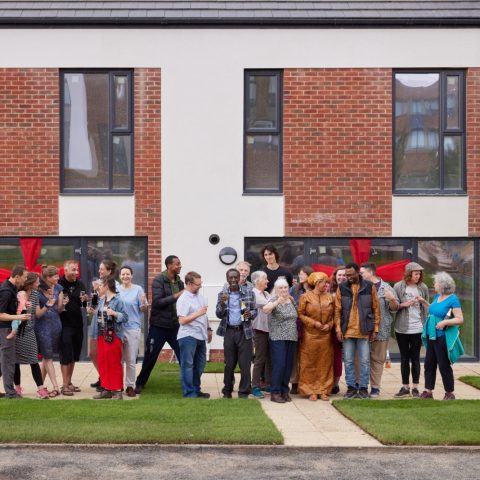
Our Changeprint can be measured by the area of land remediated and green spaces regenerated; energy and CO2 emissions saved through green methods of construction on-site; new jobs and new homes created; cyclists trained at the Cycle Hub and car journeys avoided; biodiversity net gain and the return of bird species of conservation importance; and a thriving Community in balance with the environment.
Our story
Thoresby Colliery in Nottinghamshire was opened in 1925 and closed in 2015, by which time it was Nottinghamshire's last operational coal mine. Its closure ended a long history of mining in Nottinghamshire. At one time Thoresby produced more coal than any other colliery in England, with output reaching 100,000 tonnes a week.
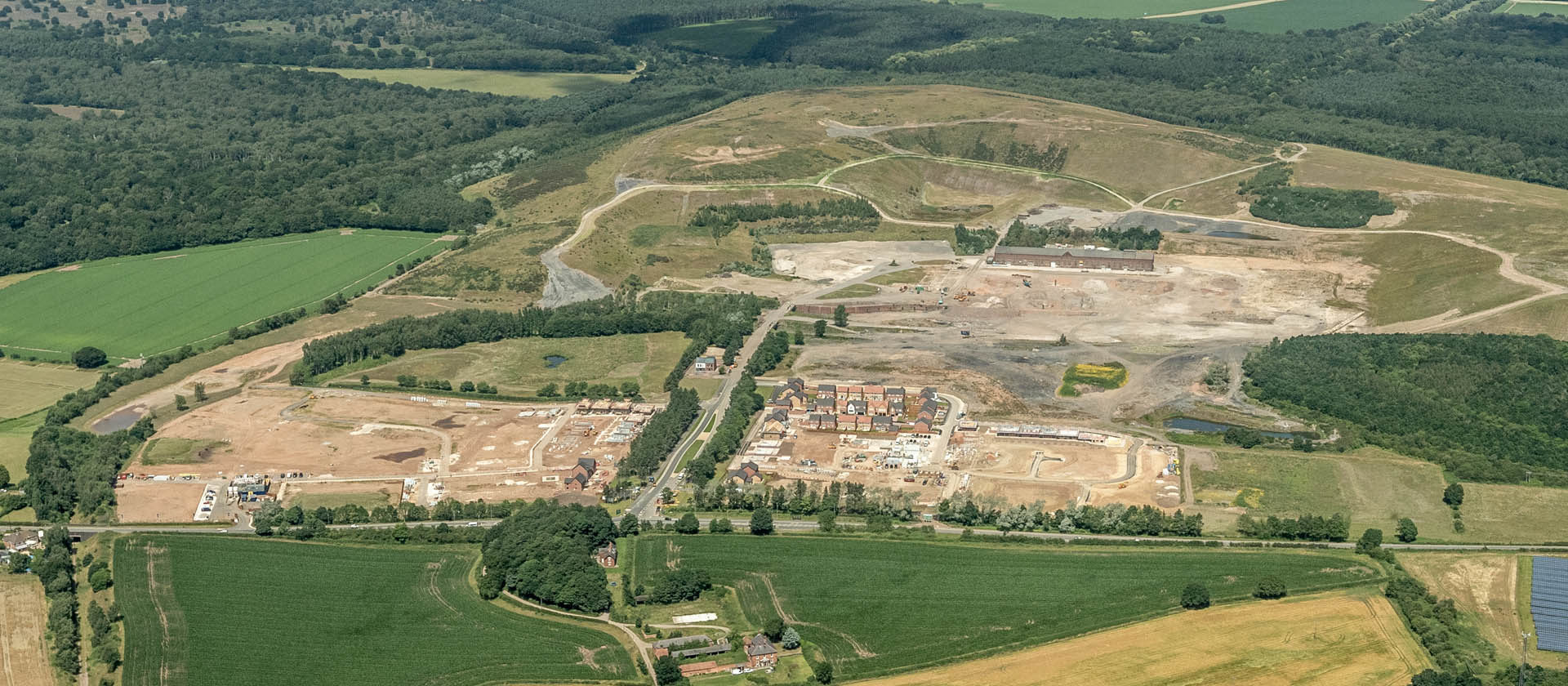
Following the closure of Thoresby Colliery, the site was purchased by Harworth Group for restoration and development. The site was named Thoresby Vale, Edwinstowe, to maintain the link with its heritage and the neighbouring village.
We received full planning permission in 2019 to deliver a masterplan for 800 new homes ranging from apartments and starter homes, through to five-bedroom houses and a retirement village over a 10-year period. The plans also include up to 250,000 sq ft of new commercial space, expected to create around 1,000 jobs, and the restoration of the former site's former spoil heap – the highest vantage point for miles around and offering panoramic views of the Sherwood Forest – to be fully restored to create a 350-acre county park, with multiple ecological habitats and significant areas of green infrastructure.
Created in partnership with Nottinghamshire Wildlife Trust, Thoresby Vale Country Park opened in July 2024. By mid-2025, 250 of the planned 800 homes were occupied.
The colliery's original workshop will be retained and restored to maintain the heritage of the site and accommodate a range of community and leisure uses as part of a new local centre. A new school will be built, incorporating the 'Forest School' ethos in its design and teaching, which aims to connect students with the outside world as much as possible.
Harworth also partnered with Nottinghamshire County Council and two local universities to trial a 5G Innovation hub on-site as part of a wider initiative for the neighbouring Sherwood Forest to become the world's first 5G 'Connected Forest'.
Grant funding has been received from Places to Ride, a partnership between British Cycling, the DCMS and Sport England, to create a multi-use cycling facility at the heart of the development, including a "Learn to Ride" area and mini pump track, as well as a modular cycling hub. The new facility will connect to the various multi-use footpaths proposed for the site's country park and enhance existing cycle path infrastructure in the area. As well as boosting the physical and mental well-being of local residents, the facility will provide a new cycling destination for the approximately 500,000 people who visit Sherwood Forest every year.
Our advice
In approaching any project, we take account of the five pillars of the Harworth Way: Planet, Communities, People, Partners and Governance. This means engaging with stakeholders early in the process of regeneration, to understand the needs of local communities, local authorities and the environment, and deliver sustainable places where people want to live and work.
Integral to our projects, we work to maximise the ecological gains of site regeneration. This can include a wide range of habitat restoration and re-creation. For example, Thoresby Vale includes woodland restoration planting 22.2ha; scrub and grassland 2.5ha; woodland planting and woodland pasture 7.7ha; heathland 30.0ha; acid grassland 11.9ha; wetland shrub planting 0.14ha; enhanced grassland to wildflower meadow 0.69ha.
We also form partnerships with universities, charities and other organisations to find solutions to some of society's most pressing challenges, including how to provide the homes and jobs that communities need while decarbonising, how to use technology and innovation to enrich people's lives, and how to protect our biodiversity and green spaces so they can be enjoyed by future generations.