Our Changeprint
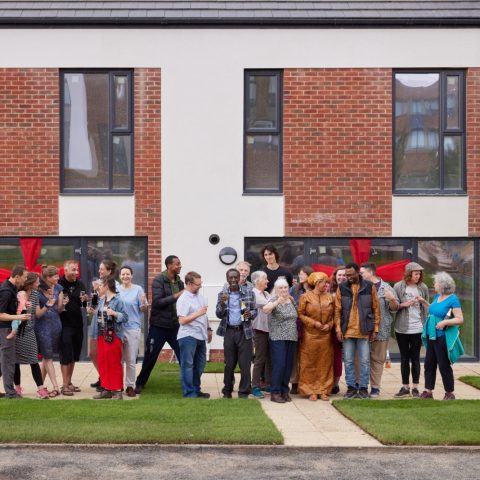
Our Changeprint can be measured by the improvements to thermal efficiency, reduced carbon emissions and improved aesthetic look of over 4000 homes that benefitted from the retrofit programme; reduction in fuel poverty across the city region; and the health and wellness benefits to residents living in these retrofitted properties.
Our story
Liverpool City Region Combined Authority's retrofit programme, where over 4000 residences received sustainable upgrades, was named Best Local Authority-Led Retrofit Programme at The Retrofit Academy Awards 2024.
Our "Retrofit for the Future" programme was born out of the success of its predecessor the REECH project (Renewables and Energy Efficiency in Community Housing) and is also the product of a very successful collaborative steering group of local authorities, social housing providers and advocacy organisations, operating under the name of Viridis.
The project was managed by Sefton Council working in collaboration with One Vision Housing, Magenta, Torus, and Liverpool John Moores University to deliver a variety of energy efficiency measures whilst also incorporating innovative technologies and monitoring techniques.
Completed in 2024, the project retrospectively fitted low-carbon solutions to homes to ensure they are fit for the future. This was achieved by improving thermal performance and energy efficiency of the properties, along with support for residents to ensure that they understand and know how best to use the products and measures that have been installed in their homes.
The innovative measures included external wall insulation (initially designed to speed up the installation via off-site construction) and installation of underfloor insulation using robots, with innovative monitoring by University members.
The project value upgrades are worth more than £5 million and were made to the lowest performing social houses, improving the energy efficiency for over 500 households across the Liverpool City Region whilst also contributing to research into new technologies.
Our advice
As with many projects, we have encountered numerous problems that threatened the delivery and compliance to the ERDF grant funding agreement. These included the delayed delivery timescales due to adverse weather conditions, significant structural deficiencies identified to the high-rise scheme, asbestos identification and management, supply chain availability and contractor liquidation. So perseverance and having project managers that can adapt, be innovative and respond to adversity, is the first lesson learnt.
Budget management together with contingency planning are essential when dealing with large budgets and multiple innovative schemes that are new to the market. Procurement proved to be a key barrier to innovative technologies; despite an initial expression of interest, contractors were unwilling to take the risk of time-bound contracts. Alternative designs and schemes were implemented and other forms of innovation were explored.
Accurate and concise record keeping is essential when managing a project over a number of years, in particular when there are staff changes amongst the various partners. Changes in personnel was a constant aspect throughout this project so managing the transitions with effective communication and supporting information is also critical.