Our Changeprint
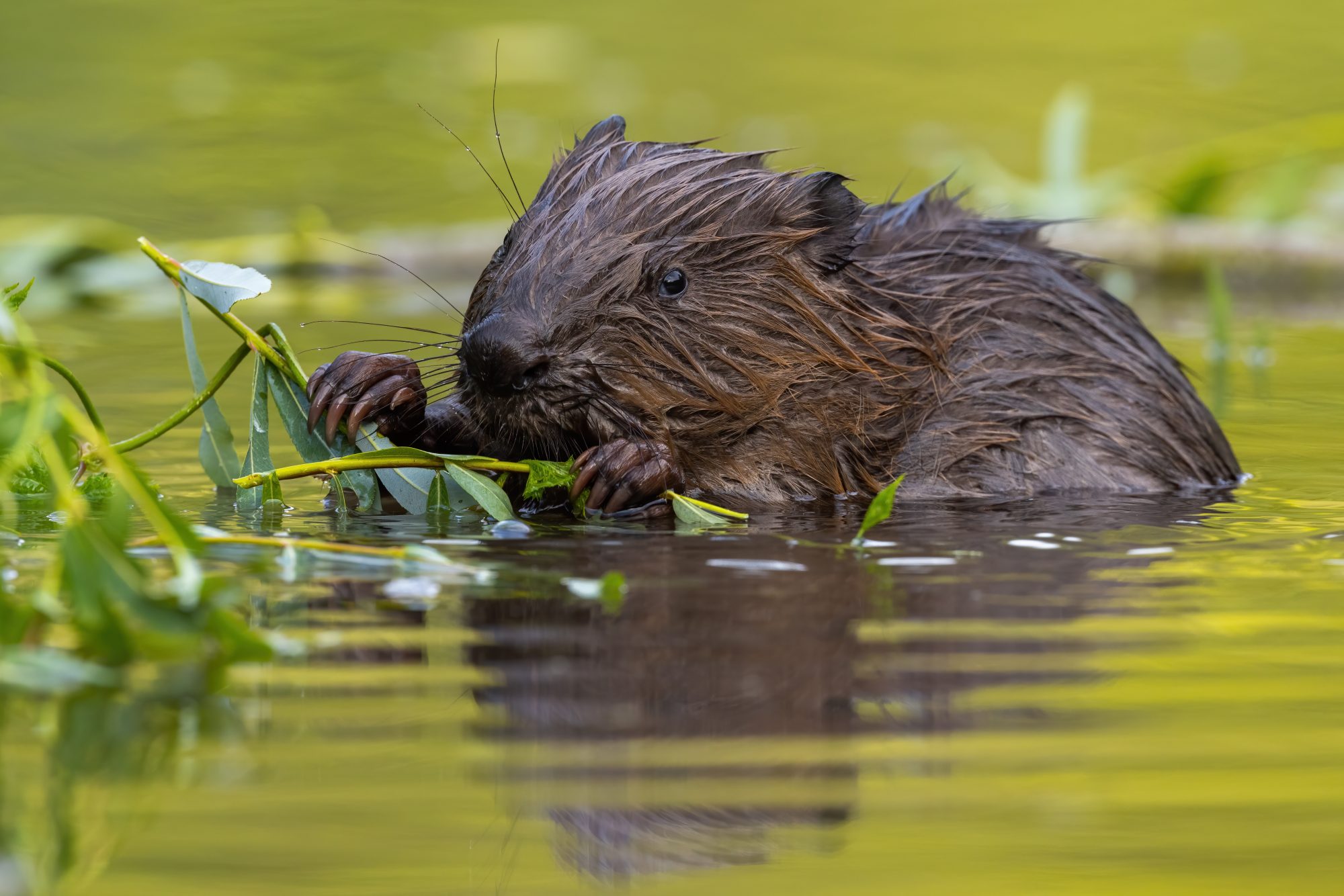
Our Changeprint can be measured by thriving Eurasian Beavers in an urban context; habitat and biodiversity improvements on site; improvements to water quality and reduced flood risk; increased public awareness and engagement of nature-based solutions and ecosystem services; and by humans and wildlife to live together more harmoniously.
Our story
Ealing Wildlife Group is a community of wildlife enthusiasts set up in 2016, dedicated to protecting, encouraging and celebrating local biodiversity in Ealing and surrounding areas.
One of our projects is the Ealing Beaver Project which reintroduced beavers to the capital. We did this in a controlled enclosure trial initially before releasing them, to study their impacts on the urban landscape, including their impacts on water filtration and flooding prevention, as well as ecosystem and habitat creation.
Beavers are often referred to as 'ecosystems engineers', because they are perfect architects of healthy and biodiverse ecosystems. They build dams and dig canals, creating wetlands and deadwood which provide ideal habitats for insects, amphibians, and even water voles. They also slow the flow of waterways, preventing flooding and filtering water, improving water quality.
Historically, beavers shaped Britain's waterways, creating complex river systems brimming with invertebrates, amphibians, birds and fish, but 400 years ago they were hunted to extinction.
Eurasian Beavers have been reintroduced in enclosed and open-release sites across the country in England, Wales and Scotland. Already, through their own efforts or with a bit of "help", beavers can now be found in Medway, Kent and Oxfordshire. It is almost an inevitability that soon they will arrive in Greater London via 'natural recolonisation', and so before that happens, it is going to be important for all stakeholders, including landowners, local councils, residents, and conservation organisations, to learn to live alongside beavers.
The Ealing Beaver Project is a collaboration between Ealing Wildlife Group (EWG), Ealing Council, Citizen Zoo, Friends of Horsenden Hill and is supported by experts at the Beaver Trust. Ealing Council provided ranger support and partial financial backing from Section 106 developer funding, and the project also received funding from the Mayor of London as part of his Rewild London 2 Fund. This support helped drive the project forward through physical preparation of the site, baseline ecological surveys and establishing monitoring activity and community engagement.
Paradise Fields was identified following a series of visits as a highly suitable habitat for beaver reintroduction and a flagship London rewilding project. Most of the 10-hectare site will be enclosed, uniquely allowing visitors to enter an immersive experience in a rewilding beaver landscape. It was important that an enclosed trial occurred before wider free-living beaver reintroduction and before natural recolonisation occurs over the coming years.
Our advice
Try to build a community of like minded people in your area, social media is great for this.
Seek out other environmental and community groups and get involved, share ideas: cross pollination and collaboration is key.
Try to engage with your local Council and especially the Parks team and rangers, in a positive way. They get a lot of criticism and you'll get better results if you offer your energy and enthusiasm to help rather than complain.