Our Changeprint
Our Changeprint can be measured by the amount energy produced with renewables; increased home energy efficiency; reduced fuel bills and carbon emissions; developing innovative retrofit strategies and aiding the delivery of new cost-effective schemes to upgrade multiple homes; and by catalysing outcome-led home retrofit at scale across the UK.
Our story
Energiesprong UK is a team of independent retrofit experts that collaborates with partners to create new approaches for home energy refurbishment at scale. We are a non-profit organisation and are wholly independent. We do not design, manufacture or install retrofit measures and work instead with partners' suppliers.
Nottingham City Homes (NCH) was the first housing organisation in the UK to adopt Energiesprong's groundbreaking approach to retrofitting housing solutions at scale, to reduce fuel poverty and address climate breakdown.
Much of NCH's stock was built in the middle of the last century, posing a challenge in bringing homes up to modern levels of energy efficiency. Climate change regulations require housing emissions of greenhouse gases to be near zero by 2050 - and standard external wall insulation is no longer enough. With over 27,000 properties, NCH sought a new method of retrofitting lots of houses to a near-zero emission standard in an affordable way.
Pioneered in the Netherlands, the Energiesprong approach upgrades a home with a manufacturing solution that includes new outside walls and windows, a solar roof and a state-of-the-art heating system, all installed in a matter of days. The aim is to generate as much energy as the homes need – making them almost zero net energy. The method works not only improve the homes' energy performance but also to dramatically improve the look and feel of the neighbourhood.
The model takes an innovative, whole-life approach to finance, with the price of the works equal to the expected planned maintenance costs and energy savings over a 30-year period.
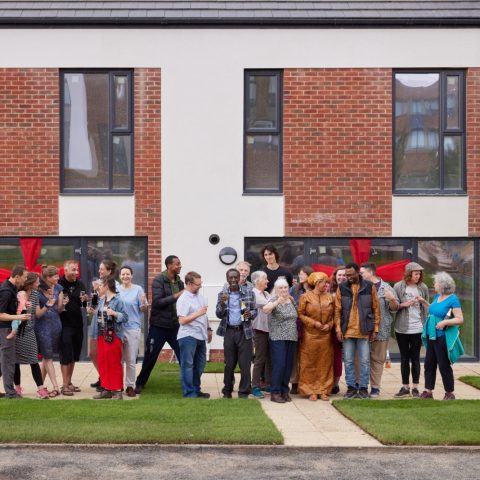
Initially, ten homes in Sneinton were chosen for the NCH pilot. Built in the 1960s of timber and concrete to a William Moss specification, they were regarded as particularly energy inefficient – and they were representative of around 700 similar properties across the city. Sneinton is one of the 10% most deprived neighbourhoods in England, so deprivation, poor health outcomes and energy inefficiency made these homes ideal for the pilot. Panels were manufactured off-site and craned onto the homes in just days, significantly reducing the time taken to insulate a house, and the inconvenience to residents.
The most energy-efficient technologies were chosen, and local renewable resources utilised, including a ground source heat pump with a thermal store; on-site battery storage; a private wire network between the houses and the energy centre to share Solar PV generation; a SmartNet controller to ensure that energy was being used in the most cost-effective way; and solar PV roofing.
As well as improving energy efficiency, the pilot sought to improve the way a home works for the people who live in it. NCH worked closely with residents, and the ability to interpret and deliver on their lifestyle requirements was part of the scoring criteria for the tender for the successful contractor.
As the first Energiesprong scheme in the UK, there was a huge learning curve for NCH and residents alike. Since then, Energiesprong has been rolled out to many more homes across Nottingham.
Our advice
Each whole house retrofit project needs to consider:
1. Objectives, e.g. what are you trying to achieve?
2. Process, e.g. what needs to be done, what are the legislative requirements and who needs to sign off on decisions?
3. Influencing factors, e.g. what needs to be thought about at each stage, such as: grant funding, internal governance etc.
With 1000s of homes requiring retrofitting in any given town or city, you'll need to create a strong methodology therefore not only provides structure, but also helps demonstrate why decisions were made. For NCH, we created a fuel poverty index that gave the highest weighting to areas with a higher proportion of residents vulnerable to fuel poverty.
There's a range of housing types in the UK, all requiring a different approach to retrofit. Understanding your project's housing archetypes before undertaking a tender exercise can structure procurement in a way that attracts best prices and maximum grant – while minimising risk.
Defining clear roles and responsibilities not only prevents duplication and makes it clear who is responsible for different risks, it also provides an opportunity to create buy-in with the wider team – from finance and legal to procurement.
Factors that are critical to success of resident engagement – and, therefore, the success of the overall project, include:
- regular two-way communication, including consultation events and newsletters are essential to keeping tenants informed and on board;
- a project Liaison Officer appointed by the landlord, and Resident Liaison Officers (RLOs) appointed by the "solution provider". The RLOs should visit all tenants with works ongoing daily; and
- a robust handover process with training to help tenants understand how to use their 'new' home and the technologies installed.